How Many Push-Ups a Day? A Plan Based on Your Max
How many push-ups a day is good? It depends on your max. Use this table to set reps per set and sets per day, see results, and spot when it is too much.
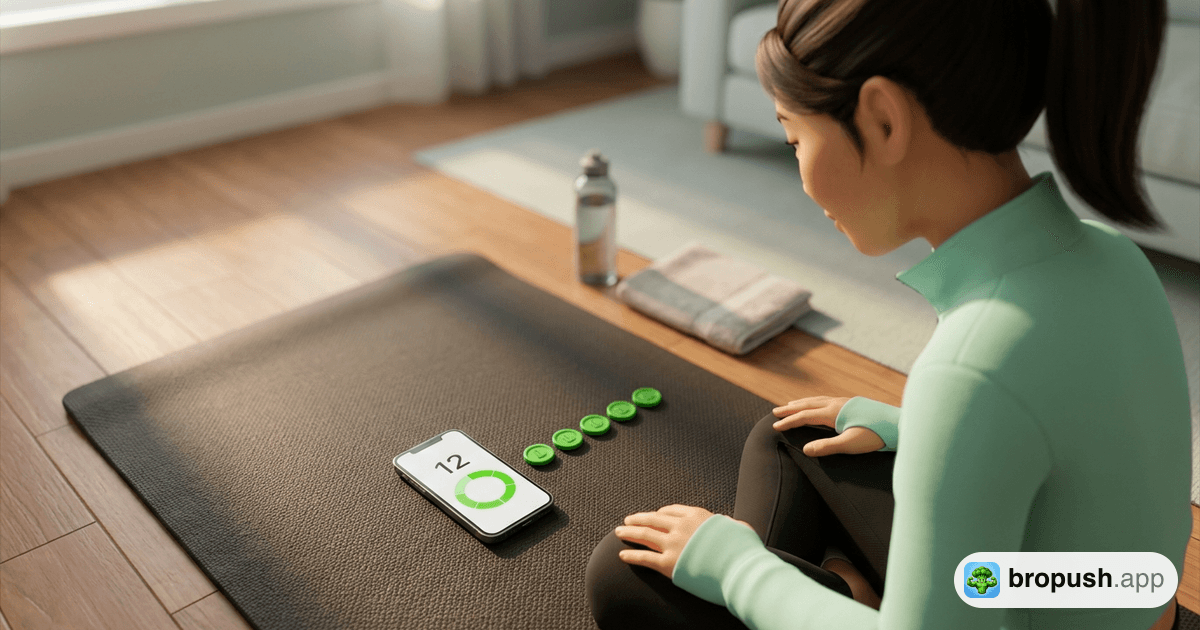
How many push-ups a day you should do depends on one number: how many clean push-ups you can do in a single set right now. A practical rule is 4 to 6 sets a day at 50 to 70% of that max, spread out and stopped well before failure. If your max is 10, that means sets of 5 to 7. If your max is 30, sets of 15 to 20.
So your right daily number might be 20, or it might be 120. Below: how to test your max, a table that turns it into sets, and how to progress.
Why there is no magic number of push-ups a day
Popular challenges give everyone the same round number, like 100. But 100 push-ups is a daily grind to failure for someone with a max of 8, and a few comfortable sets for someone with a max of 40.
What drives progress is the total amount of quality work you do over the week, done at an effort you can recover from. A review of training frequency by Grgic and colleagues in Sports Medicine found that extra sessions helped strength mainly because they added volume; when total volume was equal, frequency made no significant difference. Daily practice works because it adds good reps, not because the calendar is special.
That is the idea behind Grease the Groove: frequent, submaximal sets that build the skill of the movement without wearing you down. If the method is new to you, start with our beginner's guide to Grease the Groove.
How to find your push-up max safely
- Test when you are fresh, not after a workout.
- Warm up. A minute of arm circles, then 5 easy incline push-ups against a table or wall.
- Use a strict standard. Hands about shoulder width, body in a straight line from head to heels, chest close to the floor, arms fully straight at the top.
- Count only clean reps. The set ends when your hips sag, your range gets shorter or you need a long pause. Do not grind out ugly extra reps.
- Write it down. That number is your max for the next one to two weeks.
Do not test your max every day. If you cannot do a full push-up yet, test incline push-ups (hands on a sturdy table or counter) and lower the incline as you get stronger.
How many push-ups a day: the table by max
Take your max, find the closest row, and use the reps and sets from it. Start at the lower end of the sets range for the first week.
| Your max | Reps per set (50-70%) | At 60% of max | Sets per day | Daily total |
|---|---|---|---|---|
| 5 | 3 | 3 | 4-5 | 12-15 |
| 10 | 5-7 | 6 | 4-6 | 20-40 |
| 20 | 10-14 | 12 | 4-6 | 40-80 |
| 30 | 15-20 | 18 | 4-6 | 60-120 |
| 40 | 20-28 | 24 | 4-6 | 80-160 |
| 50+ | 25-35 | 30 | 4-5 | 100-175 |
A few notes on using it:
- The 60% column is a good default. It sits in the middle of the range and leaves plenty of reps in reserve. Bropush plans are built on exactly this: 60% of your tested max, up to six sets a day.
- Rest between sets. Common GTG guidance is at least 15 minutes between sets, and longer is fine. Spreading sets across the day works better than stacking them; our guide on push-ups all at once or through the day compares both approaches.
- Every set should feel easy to moderate. If the last two reps are a fight, the number is too high for today.
- Keep one rest day a week. Even light daily sets add up.
For a deeper look at timing and set structure, see our Grease the Groove schedule.
How many push-ups a day for beginners
If you are new to push-ups, your max is probably between 1 and 15, and the numbers will look small. That is fine. Sets of 3 to 6 good reps, four or five times a day, add up to a solid week of practice. A few beginner rules:
- Pick a version you can do with good form. Incline push-ups count. So do push-ups from a step or a low table.
- Leave reps in the tank. With a max of 6, a set of 3 or 4 is the right size. It should feel almost too easy.
- Use cues you already have. Before your morning coffee, after lunch, when you get home.
Wondering whether daily practice is a good idea in the first place? We cover recovery, rest days and who should take it slower in should you do push-ups every day.
How to progress week to week
The daily number should not stay the same for months. As your max goes up, your sets go up with it.
Retest every one to two weeks. Use the same testing steps, then recalculate your reps per set from the table.
Between tests, add slowly. When a set size feels easy for several days in a row, add one rep to each set. Or keep the reps and add one more set, up to six.
Take an easier week now and then. Every few weeks, cut your sets roughly in half for a week to let your joints and muscles catch up.
Track what you do. Without a log, it is easy to repeat the same comfortable numbers for weeks. A notebook works fine. Bropush does the bookkeeping for you on iPhone: you test your max, it sets your daily sets at 60% of it, reminds you at the times you choose, and resets the plan to your new max on scheduled test days. You log each set yourself in two taps.
How fast your max moves varies a lot between people, so compare yourself with your own last test, not with someone else's.
Signs you are doing too many push-ups
Watch for these signals:
- Your sets feel harder as the week goes on, not easier.
- Form slips. Hips sag, elbows flare wide, reps get shorter.
- Joint aches in the wrists, elbows or shoulders that are still there the next morning.
- Muscle soreness that never fades between days.
- Your max drops or stalls at the retest.
- You dread the next set. That usually means the sets are too big.
The fix is simple. Drop to 50% of your max, cut a set or two, and add an extra rest day if needed. Stop any set where form breaks down. If you have pain or an existing injury in your shoulders, elbows or wrists, check with a doctor or physio before you start daily push-ups.
Push-ups for chest, abs or belly fat: what to expect
Belly fat. You cannot burn fat from one spot by training the muscles under it. In a study in the Journal of Strength and Conditioning Research, six weeks of abdominal exercises five days a week did not reduce belly fat or waist size compared with a control group, although it did improve abdominal endurance. Push-ups are no different: they build strength and endurance, while body fat depends on your overall activity and diet.
Chest size. Push-ups can build muscle, but growth depends on how hard the sets are and how many of them you do. A meta-analysis by Schoenfeld and colleagues found that more weekly sets were linked to more muscle growth. A 2023 meta-analysis by Refalo and colleagues found that going all the way to failure gave little or no extra growth compared with stopping short, but the sets studied were still reasonably hard. Easy GTG sets at 60% of your max are designed for practice and strength. If muscle size is your main goal, you will also need some harder sets closer to failure, a few times a week.
Abs. Push-ups make your core work to hold a straight line, but whether your abs show depends on body fat, not on a push-up count.
Frequently Asked Questions
How many push-ups a day is good for a beginner?
Start with 4 to 5 sets at about 60% of your max: sets of 3 with a max of 5, sets of 6 with a max of 10. Use incline push-ups if full ones are not possible yet, and take one rest day a week.
Is 100 push-ups a day too much?
It depends on your max. With a max of 30 or more, 100 push-ups split into 5 or 6 easy sets is reasonable for many people. With a max of 10, reaching 100 would mean many hard sets near failure, which is too much to start with. Build up to it by raising your max first.
How many push-ups a day to see results?
There is no single number. Consistent submaximal sets at 50 to 70% of your max, most days of the week, are a sensible starting point. Many people notice the same sets feeling easier within a couple of weeks, but results vary. Retest every one to two weeks to see real progress.
Can push-ups help lose belly fat?
Not directly. No exercise spot-reduces stomach fat. Push-ups build strength and endurance; fat loss depends on your overall activity and diet.
How many push-ups should I be able to do?
Published norms vary by age, sex and testing method, and the tables online often disagree. A more useful question is whether your own max is going up, so test it, train at a fraction of it, and retest.
Related guides
- Should You Do Push-Ups Every Day? The Safe Way — recovery, rest days and who should go slower
- Doing Push-Ups Throughout the Day or All at Once? — one session versus spread-out sets
- Grease the Groove Schedule: Sets, Reps and Rest — how to time your sets across the day
- Can You Double Your Push-Ups in 30 Days? A Grease the Groove Plan — a 30-day GTG plan for push-ups
- What Is Grease the Groove (GTG)? Beginner's Guide — the method behind the numbers